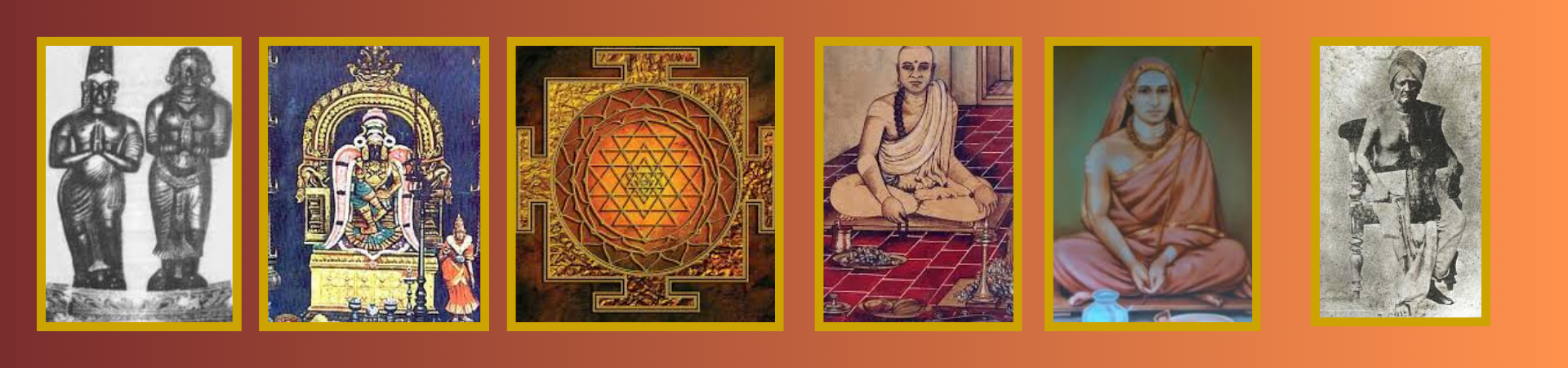
The Sacred Art of Muttusvami Dikshitar

‘Guruguha’ is the mudra (signature) of the revered Karnataka Sangita Vaggeyakara (carnatic music composer) Shri. Muttusvami Dikshita who lived in Tamilnadu, South India, during 1776-1835 CE.
This sacred signature reveals the profound spiritual essence that permeates every composition.
The Divine Musical Journey
Shri Muttusvami Dikshitar’s compositions are not merely musical pieces. They are spiritual pathways, each one a devotional offering. His Kirtanams embody:
- Devata Stuti
- Sacred Geography – Sthala Puranas and Tirtha Yatra
- Vedanta Tattva
- Tantra and Upasana
- Sampradaya (Tradition)
- The Musical Sampradaya and Raga grammar of Venkatamakhi and his descendants
The Religious Context
Understanding Dikshitar’s music requires understanding the religious and spiritual milieu in which he lived and created.
His compositions serve as sonic forms of deity worship, each raga carefully chosen to invoke specific divine moods and energies. The lyrics are steeped in Samskrta devotional lore, drawing from Puranic stories, Upanishadic wisdom, and temple rituals. His musical journeys to sacred sites – from Kashi to Rameshwaram, from Tiruvarur to Ettayapuram – were not mere travels but spiritual pilgrimages that birthed compositions as offerings to the presiding deities. These kirtanams also embodied the context of his own personal rituals and upasana – the Srividya tradition of worship of the divine mother.
The Musical Tradition
Shri Dikshitar’s compositions represent the pinnacle of sampradaya sangita, music rooted in unbroken tradition and adhering strictly to lakshana (musical principles). His music is characterised by a certain characteristic gait, choice of certain pedagogical and aesthetic approaches and adherence to raga traditions of his ancestors from the family of Venkatamakhi and his descendants. He inherited this tradition from his own father and the tradition has been preserved through generations by dedicated disciples and family members, maintaining the authentic renditions and interpretations as passed down through the guru-shishya parampara.
Our Mission
This site attempts to understand and illuminate the unique musical, religious and spiritual contributions and familial heritage of Shri Dikshitar and other great vaggeyakaras (composer-musicians) of that era. We emphasize:
- The sacred context of sampradaya sangita (traditional music)
- The background, heritage and history of these compositions
- The devotional and musical intent behind each composition
- The lineage of the Dikshitar parampara
Many were his journeys – musical, religious, spiritual and physical. Each journey has left us treasures of devotional music that continue to elevate and inspire seekers and musicians today.
For detailed biography, refer to the Vaggeyakara caritram.
What You’ll Find Here
- Texts and translations
- Ebooks and Publications
- Detailed analyses of ragas in their musical and devotional context
- Databases and indices of compositions organized by deity, temple, and theme
- Historical and Cultural Backdrop of the Dikshitar musical and familial lineage
People
The website contains prior interviews and content collected, organized and maintained by Smt. Vidya Jayaraman.
The blog section contains articles primarily by Shri Ravi Rajagopalan and Dr. Aravindh Ranganathan and a few other contributors including notations and material typeset by Dr.P.P.Narayanaswami.
Connect With Us
Contact: Vidya Jayaraman
Email: vidyajay @ gmail.com